Last updated on 03/09/2026
On this page
Chile stretches over 4,300 kilometers from the tropics to the gateway of Antarctica, so asking "what is the weather like in Chile?" is a bit like asking about the weather in Europe. The honest answer: pick your region first. This guide covers each one, with the details that matter when you are choosing where to live rather than planning a holiday.
One thing before we start: Chile is in the southern hemisphere, so the seasons are reversed. Summer runs from December to February, winter from June to August. The coldest month is July, the warmest is January.
The north: the driest desert on Earth
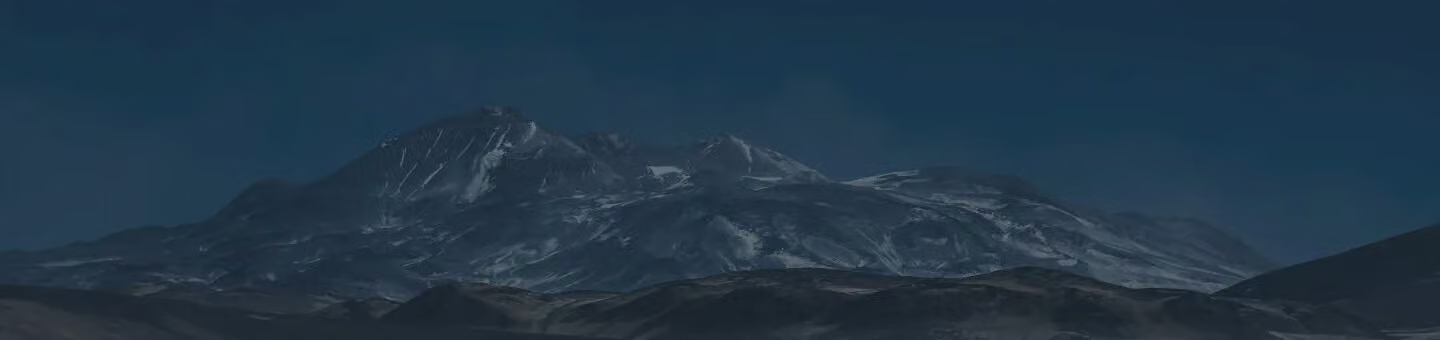
From Arica down to roughly Copiapó, you are in the Atacama, the driest desert in the world. Some weather stations here have never recorded rain. Cities like Antofagasta and Iquique sit on the coast, where the cold Humboldt current keeps temperatures surprisingly mild: 15-25°C all year, with no real winter and no scorching summer either. Inland and at altitude, the picture changes: strong sun during the day, sharp cold at night, and occasional summer rains on the altiplano (the so-called invierno altiplánico).
If you imagined moving to a desert meant heat, adjust the picture: the coastal north is among the most temperate places in the country. The trade-off is greyness, since the coastal fog known as camanchaca regularly blankets the shore in the morning.
The Norte Chico: semi-arid and sunny
Between Copiapó and the Aconcagua valley, the desert softens into semi-arid scrubland. La Serena is the reference city: mild, sunny, with a narrow temperature range and very little rain. The clear skies are no secret, as this is where many of the world's major astronomical observatories are located.
Need ongoing help in Chile?
The membership includes help with:
- Housing and service-provider issues
- Healthcare and banking procedures
- Local professional recommendations
The center: Mediterranean, like coastal California
Santiago, Valparaíso and the central valleys have a Mediterranean climate: hot, completely dry summers and cool, rainy winters. In Santiago, January afternoons regularly pass 30°C (with very low humidity, so it is bearable), while July brings highs around 14°C and nights near freezing. Almost all the year's rain falls between May and August.
Two local quirks matter for expats. First, Santiago sits in a basin, and in winter the combination of cold air and surrounding mountains traps smog. We cover this in our page on pollution in Santiago. Second, Chilean houses are famously under-insulated and central heating is rare, so winter indoors often feels colder than winter outdoors. Budget for good heating. On the coast, Valparaíso and Viña del Mar run 5-8°C cooler than Santiago in summer, which is exactly why Santiaguinos migrate there in January.
The south: green for a reason
From Concepción southward, the Mediterranean pattern gives way to an oceanic climate. Rain increases steadily as you go south: roughly 1,000mm a year in Concepción, around 2,000mm in Valdivia, one of the rainiest cities in Chile. Summers stay mild and pleasant (20-25°C), winters are not very cold (highs around 10-13°C) but long, grey and wet. This is the land of lakes, forests and volcanoes, and the price of all that green is a serious rainy season. If you are considering Puerto Varas or anywhere in the Lake District, visit in July before you commit, not in February.
Patagonia: wind first, cold second
South of Puerto Montt, the climate turns subpolar oceanic on the western side and cold steppe on the eastern plains. Punta Arenas summers rarely pass 15°C, winters hover around freezing, and the famous Patagonian wind blows hardest exactly in summer. It is a spectacular place to live for a certain kind of person, but nobody moves there for the weather.
Easter Island
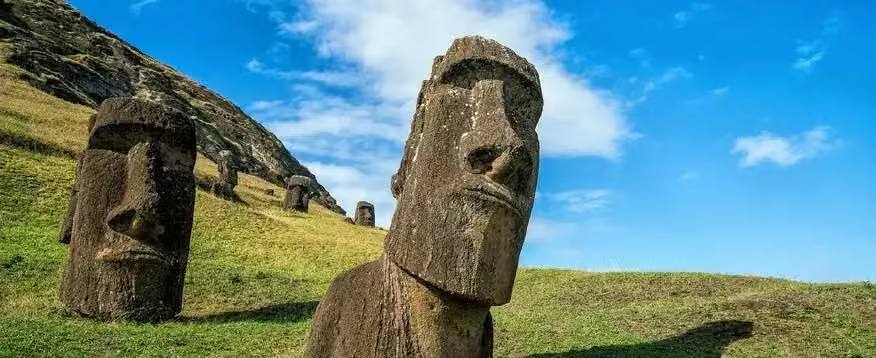
For completeness: Easter Island, 3,500km out in the Pacific, is humid subtropical, with temperatures of 18-28°C year round and rain spread across the year. It is the only genuinely warm-and-humid corner of Chile.
What this means for your move
The center concentrates jobs, schools and services, and its climate is one of the easiest in the world to live with, as long as you solve the heating and insulation question before your first winter. The north suits people who want eternal spring and do not mind the desert landscape. The south rewards those who accept four months of rain in exchange for scenery. For a city-by-city comparison beyond the weather, see our guide on Chilean cities, and for earthquakes and other non-meteorological surprises, our page on natural risks.
Frequently asked questions about the climate in Chile
Weather in Chile
Is Chile a hot or cold country?
Both, depending on where you stand. The north is warm and dry all year, the center has hot summers and cool winters, and Patagonia is cold and windy even in January. What surprises most newcomers is that no inhabited region of Chile is tropical: even in the desert north, the ocean keeps coastal temperatures mild, and nights get cold.
What is the coldest month in Chile?
July, the middle of the southern winter. In Santiago, expect daytime highs around 14°C and nights close to freezing. In Punta Arenas, July hovers around 0-4°C during the day. The warmest month is January almost everywhere.
What kind of climate is in Chile?
Almost every kind. The Atacama in the north is the driest desert in the world, the center around Santiago and Valparaíso is Mediterranean, the south from Concepción to Puerto Montt is oceanic and rainy, and Patagonia ranges from cold steppe to subpolar. Easter Island, far out in the Pacific, is humid subtropical.
Keep reading

Life in Chile
Retire in Chile: The Complete Guide for US Citizens (2026)
Life in Chile
Retire in Chile vs Portugal, Uruguay & Panama (2026)

Life in Chile
Chilean food

Life in Chile
Amazon in Chile: Online Shopping Guide for Expats

Life in Chile
Average Salary Chile 2026: Wages, Minimum Wage, Take-Home

Life in Chile
Chilean Customs: Etiquette, Tipping, and Social Norms