Last updated on 08/09/2026
On this page
Two cities, very different day to day
Puerto Varas and Puerto Montt are in Chile's Lake District (Región de Los Lagos), about 1,000 kilometres south of Santiago. They are only 20 km apart, but day-to-day life differs considerably.
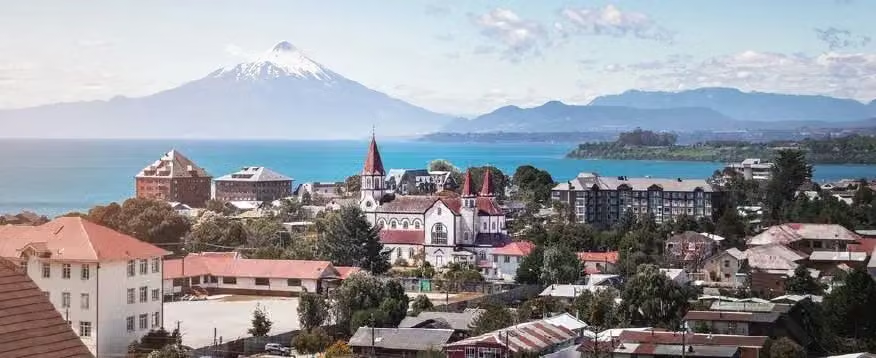
Puerto Varas sits on Lake Llanquihue with views of Volcán Osorno. It has well-preserved German-heritage architecture, cafes, kuchen (German cake) shops, and a small-town feel. It is also a base for hiking, kayaking, fly fishing, volcano climbing, and skiing on Osorno in winter.
Puerto Montt is the regional capital and an industrial harbour city. It provides hospitals, shopping centres, government offices, and other urban services, but has fewer of the features that draw expats to Puerto Varas. Many visitors pass through it rather than stay.
Puerto Montt and Puerto Varas are 20 km apart. I would usually choose Puerto Varas unless a job makes living in Puerto Montt more practical. Puerto Montt is an industrial harbour with a more limited choice of restaurants, bars, and leisure activities. Puerto Varas generally suits expatriates better, except that it becomes crowded during the January and February tourist season.
The weather situation
It rains frequently. The Lake District has a temperate oceanic climate, with grey skies and drizzle especially common from April to October. Summers (December to March) are mild and green, with long daylight hours. Winter is damp and cold enough to require proper heating. If you come from northern Chile or a Mediterranean climate, expect a substantial adjustment.
The rainfall keeps the area green. National parks such as Vicente Pérez Rosales are nearby, with access to lakes, volcanoes, and temperate rainforest.
Where to live
In Puerto Varas itself, the centre puts the lake, the cafes, and most services within walking distance. It is small, so the supply of good apartments is limited and the ones with lake views go fast. Puerto Chico, the residential stretch along the costanera east of the centre, is quieter while keeping the lake at your doorstep, and it is where many families settle. Beyond town, rural properties (parcelas) on the roads toward Ensenada and Nueva Braunau give you space, privacy, and often a volcano view, but you will be driving for every errand.
Need help finding a home?
The service includes:
- Properties compared with market prices
- Lease reviewed before you sign
- Accompanied viewings in Santiago
It is also worth widening the search around the lake. Llanquihue, ten minutes up the shore, is a working town where housing is cheaper. Frutillar, about half an hour north, is a quieter German-heritage town with the Teatro del Lago concert hall and an older population. If work ties you to Puerto Montt, Pelluco on the city's eastern edge is a residential option on the water with several restaurants.
For families, the schooling follows the German heritage: Puerto Varas has German-heritage private colegios, including Colegio Germania del Verbo Divino, and there are further options in Puerto Montt. There is no full international school in the area, so if you need English-language education, look carefully before committing. Our education in Chile guide explains how the colegio system works.
Practical matters
Living costs are lower than Santiago. Whatever you choose, you will probably want a car. Public transport exists but is limited, and the area's parks, lakes, and trailheads are spread out.
The German heritage is not just decorative. You will find it in the architecture, the food (the kuchen is excellent), and the annual Oktoberfest-style beer festival. There is a small but established expat community, and the locals tend to be welcoming.
Getting to Santiago requires either a 1.5-hour flight from Puerto Montt's airport or a 12-to-14-hour overnight bus ride. Chiloé Island is accessible by ferry from Puerto Montt.
Who is this for?
Puerto Varas tends to suit nature lovers, retirees, and remote workers who do not mind the rain and want a quiet setting. It is a small town, so nightlife, restaurant choice, and the social scene are limited. If you need a large city, look elsewhere. If lake and volcano views matter more than urban convenience, it is worth considering.
Frequently asked questions about living in Puerto Varas and Puerto Montt
Living in the Lake District
Is Puerto Varas a good place to live?
Yes, if the trade-offs suit you. Puerto Varas is a small town on Lake Llanquihue with a volcano view, German heritage, an established expat community, and easy access to outdoor activities. It also has frequent rain from April to October, limited nightlife and restaurants, and a practical need for a car. It tends to suit nature lovers, retirees, and remote workers better than people who want big-city life.
Is it better to stay in Puerto Varas or Puerto Montt?
Puerto Varas is usually the better fit for expats, while Puerto Montt is the regional capital with hospitals, shopping centres, the airport, and government offices. The two cities are 20 km apart, so many people live in Puerto Varas and use Puerto Montt for services. Puerto Varas does get crowded during the January and February tourist season.