Last updated on 03/09/2026
On this page
The basics
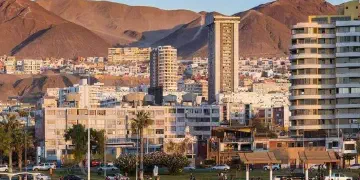
Concepción sits about 500 kilometres south of Santiago, where the Biobío River meets the Pacific. The city itself is mid-sized, but it anchors Gran Concepción, a conurbation that also includes Talcahuano, San Pedro de la Paz, Chiguayante, Hualpén, Penco and a few other comunas. Together they hold close to a million people, which makes this Chile's second-largest urban area after Santiago.
That "second city" status matters. Concepción is not a scaled-up beach town or a mining outpost. It is a real metropolitan area with its own economy, its own cultural identity, and a healthy rivalry with the capital. People from here, penquistas, tend to be proud of not being from Santiago.
Two things define the character of the place. First, the universities: the Universidad de Concepción, with its famous open campus and bell tower, is one of Chile's most important universities, and it shares the city with several others. Gran Concepción has the second-largest concentration of universities in the country, and the student population keeps the city young, political, and lively. Second, the music. Concepción calls itself the cradle of Chilean rock, having produced bands like Los Tres and Los Bunkers, and in 2023 UNESCO named it a Creative City of Music. The free REC festival (Rock en Conce) draws huge crowds every year. Whether the "cradle" title is strictly accurate is debated, but the live music scene is real.
Climate: the start of the rainy south
Concepción marks roughly the point where central Chile's dry climate gives way to the wet south. The city gets somewhere around 1,000mm of rain per year depending on which dataset you trust, and almost all of it falls between May and August. June alone can bring over 200mm. Winters are not very cold, with daytime highs around 13-14°C, but they are grey, damp, and long enough that you will want proper heating and a dehumidifier.
Summers compensate. From December to February you get mild, mostly dry weather with highs around 22-24°C, cooled by the ocean. It rarely gets hot the way Santiago does. If you want a reference point: noticeably rainier than Santiago, but only about half as wet as Valdivia.
Cost of living
Concepción is cheaper than Santiago, and the gap is biggest exactly where it matters: rent. Crowdsourced cost-of-living data as of 2026 puts daily expenses around 10-13% below Santiago, and total costs including rent roughly 20% lower. A budget that gets you a small flat in a decent Santiago neighborhood gets you something noticeably larger here, often in a better location relative to the centre.
It is not the cheapest city in Chile, though. Smaller southern cities like Valdivia or Temuco are cheaper still. You are paying for big-city infrastructure: malls, hospitals, an airport, and universities. For the full national picture, see our cost of living in Chile guide.
Work and economy
This is one of Chile's main industrial regions. The Biobío economy runs on forestry and cellulose, fishing, manufacturing, and the ports. Talcahuano, the port city fused onto Concepción's northern edge, hosts shipyards, an oil refinery, the historic Huachipato steelworks, and Chile's largest naval base. The ports of Talcahuano, San Vicente and nearby Lirquén move much of the country's forestry exports.
Need help finding a home?
The service includes:
- Properties compared with market prices
- Lease reviewed before you sign
- Accompanied viewings in Santiago
For foreigners, the realistic options are the same as in most Chilean cities outside Santiago: jobs tied to the universities and research, engineering and forestry-sector roles if you have specialised experience, English teaching, or remote work. Local salaries are lower than Santiago's, and almost everything happens in Spanish. Remote workers do fine here, since the city has solid internet and all the services you need.
Where to live
The real decision is usually the city centre versus San Pedro de la Paz, and it comes down to whether you want to walk or drive.
The centro and Barrio Universitario form the walkable urban core. The university district has the cafes, bookstores, bars and cultural life, which makes it the natural pick for students, academics, and anyone who wants to live without a car. Quality varies block by block, as in any Chilean city centre. Still within Concepción proper, the hillside sectors of Lomas de San Sebastián and Lomas de San Andrés offer newer apartments and a reputation for safety, popular with professionals and families.
San Pedro de la Paz, across the Biobío bridge, is where better-off families and most resident foreigners cluster. Sectors like Andalué sit among pine forest and lagoons and carry the region's most expensive housing. It is suburban, green, and car-dependent: the opposite trade-off from the centre.
Two cheaper alternatives complete the picture. Chiguayante is a quieter comuna along the river south of the centre, less expensive than San Pedro and connected to downtown by commuter rail, good value for families. Talcahuano is cheaper still, but it is an industrial port city, and its low-lying coastal sectors were the ones hit by the 2010 tsunami. Some newer sectors like Brisas del Sol near the airport are fine, just look carefully.
About that earthquake: on 27 February 2010 a magnitude 8.8 quake struck offshore, about 115 kilometres from Concepción, and the tsunami that followed badly damaged Talcahuano's waterfront. The city absorbed the blow, rebuilt, and modern Chilean building codes performed remarkably well overall. Earthquakes are a fact of life everywhere in Chile, not a Concepción-specific problem, but if you settle near the coast here, elevation and tsunami evacuation routes are worth a few minutes of your attention.
Healthcare
This is one of Concepción's strong points compared with other regional cities. The Hospital Regional Guillermo Grant Benavente is among the largest and most complex public hospitals in Chile and serves as the referral centre for much of the south. On the private side, the Sanatorio Alemán, founded by German immigrants in the 1890s, is the largest private clinic outside Santiago, and there are several other private clinics in the metro area. Unlike in smaller cities, you will rarely need to travel to Santiago for treatment. See our healthcare in Chile section for how the public and private systems work.
Getting there and around
Gran Concepción is one of the few Chilean cities with a commuter rail system. The Biotren runs two lines across the metro area, linking the centre with Talcahuano, Hualqui, Chiguayante, San Pedro de la Paz and Coronel, using a prepaid Biovías card. Add a dense bus network and you can manage without a car, although people in the suburban comunas mostly drive.
Carriel Sur airport, in Talcahuano about 20 minutes from downtown, has multiple daily flights to Santiago (a bit over an hour in the air) plus direct connections to several other Chilean cities. Buses to Santiago take roughly 5 to 7 hours, and driving takes about 5. For the national picture, see our guide to moving around Chile.
Who is this for?
Concepción suits people who want a real city, with proper hospitals, universities, culture and an airport, at a meaningfully lower cost than Santiago, and who do not mind grey, wet winters. It is a natural fit for academics and students, for families who want suburban space in San Pedro de la Paz, and for remote workers who would rather have live music and student energy than tourist scenery. It is the wrong choice if you are chasing sunshine or a postcard setting. This is a working city, and it looks like one.
We have fewer expat contacts in Concepción than in Santiago or Valparaíso, so our first-hand knowledge is more limited. If you live there or have lived there, we would genuinely like to hear from you.
Frequently asked questions about living in Concepción
Living in Concepción
Is Concepción, Chile safe?
Concepción is a quiet city by Chilean standards, without major insecurity problems. As in any Chilean city centre, quality varies block by block downtown, while hillside sectors like Lomas de San Sebastián and Lomas de San Andrés, and suburban San Pedro de la Paz, have a reputation for safety. If you settle near the coast, spend a few minutes on elevation and tsunami evacuation routes. That is an earthquake-country habit, not a Concepción-specific worry.
How much does it cost to live in Concepción Chile?
Crowdsourced cost-of-living data as of 2026 puts daily expenses around 10-13% below Santiago, and total costs including rent roughly 20% lower, and rent is exactly where the gap is biggest. It is not the cheapest city in Chile, since smaller southern cities like Valdivia or Temuco are cheaper still, but you are paying for big-city infrastructure. See our cost of living in Chile guide for the full picture.