
Last updated on 24/06/2026
On this page
Chileans will forgive your imperfect Spanish long before they forgive a skipped greeting. The customs in Chile are subtle rather than dramatic: no elaborate rituals, just a dense web of small courtesies that mark you instantly as someone who gets it or someone who doesn't. Learn a dozen of them and daily life gets noticeably warmer.
(Quick disambiguation: this guide covers cultural customs: etiquette and social norms. If you searched for border customs and what you can bring into the country, you want our guides on moving to Chile from the US and things to know before moving to Chile.)
Greetings: The One Kiss Rule
The foundation of Chilean etiquette:
- Women greeting anyone, and men greeting women: one kiss on the right cheek, really a cheek-to-cheek touch with a kissing sound. This applies to introductions, arrivals, and departures, even with strangers at a dinner party.
- Men greeting men: a handshake, or a hug and back pat between friends.
- Arriving and leaving a gathering: greet every person individually, and say goodbye the same way. Slipping out with a general wave reads as cold. Yes, leaving a ten-person asado takes ten minutes.
- Business settings: handshakes all around, with the cheek kiss appearing once a working relationship turns friendly.
Use usted with older people and in formal situations, tú with peers, and don't worry, Chileans switch to first names quickly.
Tipping in Chile: The 10% Propina
Chile tipping is mercifully standardized:
- Restaurants: the bill arrives with a suggested 10% propina added (you will be asked "¿con propina?" when paying by card). It is technically voluntary, but paying it is the firm social norm, since waiters' incomes depend on it. Exceptional service might earn a little extra in cash, while bad service is the only reason to decline.
- Bars and cafés: same 10% when there is table service, and optional at the counter.
- Taxis and ride apps: no tip expected, and rounding up is plenty.
- Supermarket baggers and gas station attendants: small coins (a few hundred pesos) are customary, as many work for tips alone.
- Delivery, hairdressers, hotel staff: modest tips appreciated, not demanded.
Need ongoing help in Chile?
The membership includes help with:
- Housing and service-provider issues
- Healthcare and banking procedures
- Local professional recommendations
That's the whole system. Nobody is mentally auditing you beyond the restaurant 10%.
Punctuality: Two Clocks Running at Once
Chile runs on a dual clock, and knowing which one applies is core social literacy:
- Social time: arriving 15–30 minutes late to a dinner or party is not rude. It is expected. Showing up exactly on time may find your hosts in the shower. An 9 pm invitation means 9:20–9:30.
- Business and official time: meetings, medical appointments, school events, and anything involving institutions start close to schedule. Chileans are the most punctual professionals in Latin America, and foreigners get less slack, not more.
- Meals run late and long: lunch around 1:30–2:30 pm (often the main meal), dinner rarely before 8:30 pm. In many homes, dinner is replaced by once, the beloved early-evening spread of bread, avocado, cheese, ham, and tea, somewhere between 5 and 8 pm. Being invited to once is a small badge of acceptance.
How Addresses Work in Chile
A practical custom that confuses every newcomer: the address in Chile follows a strict format you will need for deliveries, paperwork, and taxis:
[Street name] [number], [apartment/house], [comuna], [city/region]
For example: Av. Apoquindo 4501, depto 1203, Las Condes, Santiago.
The crucial element is the comuna, the municipality. Santiago is not one address zone but 30+ comunas, and "Santiago" alone usually means the central comuna, not the metro area. Forms will ask for comuna and región separately (Región Metropolitana for the capital). Other quirks: depto = apartment, casa = house in a condominium, oficina = office, and street numbers can repeat across comunas, which is why no Chilean ever gives an address without naming the comuna. There are no ZIP-code habits here. Postal codes exist but daily life ignores them.
Social Norms That Smooth Daily Life
- Personal questions come early. Where you live, whether you're married, what you pay in rent: friendly curiosity, not interrogation. Deflect with humor if you prefer.
- Sobremesa is sacred. The after-meal table conversation can outlast the meal itself. Leaving right after dessert is the gringo move to avoid.
- Bring something. Invited to a home? A bottle of wine, dessert, or flowers. Arriving empty-handed gets noticed.
- Avoid the touchy triangle: politics, the Pinochet era, and Chile–Argentina/Peru–Bolivia comparisons. Let Chileans raise them first. Praise for Chilean wine, landscapes, and pastel de choclo is always in season.
- Chilean Spanish is its own dialect. Spoken fast, endings dropped, sprinkled with po, cachái, fome, and al tiro. Locals know it's hard and find foreign attempts charming.
- Dress is understated but tidy: Santiago professionals leans neat-casual, and grooming standards are quietly high.
Business Etiquette in Chile
Chilean business culture is the most formal in South America, with a few defining customs:
- Hierarchy is real. Decisions concentrate at the top, so meetings may be pleasant but inconclusive until the senior person weighs in. Titles (don/doña, señor/señora, professional titles like ingeniero) are used more than Americans expect.
- Relationships precede transactions. Expect small talk (family, football, your impressions of Chile) before the agenda. Rushing to business reads as brusque.
- Communication is indirect. A flat "no" is rare, and "lo vamos a evaluar" (we'll evaluate it) often means no. Read softness as information.
- Meetings: schedule a week or more ahead, confirm the day before, start within 10–15 minutes of the hour, and follow up in writing.
- Dress conservatively for first meetings: suits remain standard in banking and law, smart casual in tech.
Two Cultural Footnotes Worth Knowing
Chile is a country of poets. Vicente Huidobro, Nicanor Parra, Gabriela Mistral, Pablo Neruda: two of them won the Nobel Prize in Literature (Mistral in 1945, Neruda in 1971), and Chileans are quietly proud of it. Quoting a line of Neruda will never hurt you socially.
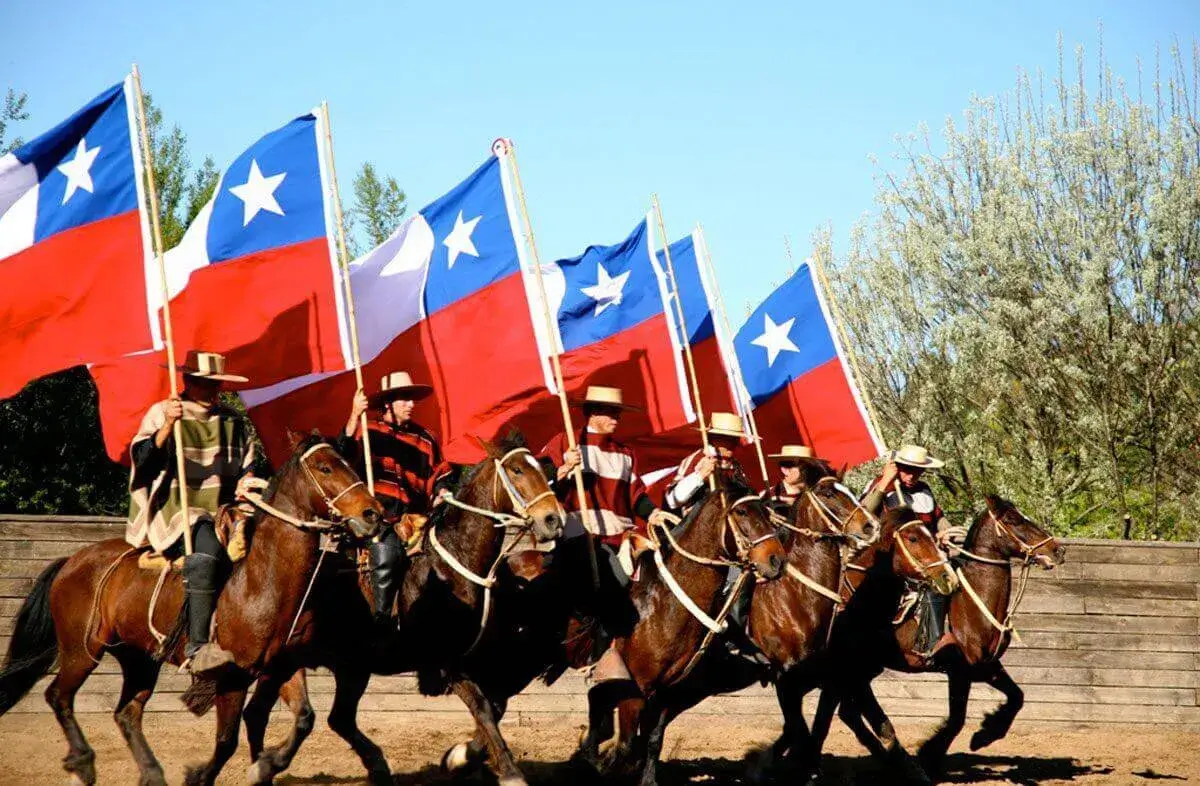
The Fiestas Patrias own September. Chile's national celebrations run over two days: September 18, commemorating the start of the independence process in 1810, and September 19, the Day of the Glories of the Army, with a large military parade in Santiago. In practice the whole week slows down, fondas (open-air party grounds) appear everywhere, and the country dedicates itself to empanadas, terremotos and cueca dancing. Plan no business that week.
Customs Are the Soft Landing
None of this is hard. It is simply different, and Chileans extend enormous goodwill to foreigners who make the visible effort: greet properly, pay the propina, arrive socially late and professionally on time, and name your comuna. The rest comes with months, not years.
For the bigger cultural picture (values, regional differences, daily rhythms), browse our full living in Chile section and our honest list of the pros and cons of living in Chile. And if you are preparing the move itself, the 260-page Chile handbook covers culture, paperwork, and everything in between.
Keep reading

Life in Chile
Retire in Chile: The Complete Guide for US Citizens (2026)
Life in Chile
Retire in Chile vs Portugal, Uruguay & Panama (2026)
Life in Chile
Chilean food

Life in Chile
Climate in Chile

Life in Chile
Amazon in Chile: Online Shopping Guide for Expats

Life in Chile
Average Salary Chile 2026: Wages, Minimum Wage, Take-Home