Last updated on 03/09/2026
On this page
Working holidays in Chile are one of the easiest legal ways for young travelers to live in the country for a year, funding the trip with local jobs while exploring everything from the Atacama Desert to Patagonia. The catch: the visa only exists for nationalities whose governments have signed a reciprocal agreement with Chile, quotas are limited, and the rules differ country by country.
Here is how the Chile working holiday scheme works, who qualifies, and what to do when the year is up and you do not want to leave.
Which nationalities can get a working holiday visa for Chile?
Chile issues working holiday visas only under bilateral agreements. As of 2026, Chile has working holiday (or "work and holiday") agreements with countries including:
- Oceania: Australia, New Zealand
- North America: Canada
- Europe: France, Germany, Denmark, Sweden, Czech Republic, Hungary, Portugal
- Asia: Japan
Agreements are added periodically and conditions are updated, so confirm the current list with the Chilean consulate in your country or with SERMIG, Chile's national migration service, before planning around it. If your nationality is not on the list, a working holiday in Chile is not available to you, but other routes exist, from the temporary visas categories to a sponsored work visa.
Working holiday visa Chile: age limits and quotas
Most agreements share the same profile. You typically need to be 18 to 30 at the time of application, though some programs stretch the upper limit to 35 (Canada, for example, under its International Experience program). Each agreement caps the number of visas per year, from a few hundred for the smaller European programs to several thousand for Australia and New Zealand, and participation is normally once per lifetime. You will also need to show proof of funds for the start of your stay plus a return ticket or the money to buy one (amounts vary by agreement, so budget on the order of a few thousand US dollars), hold health insurance covering the full stay, and travel without dependents on the same visa.
Because quotas reset each year, popular programs can fill up. Application windows typically open at the start of the quota year, and when a year's allocation runs out the next chance is the following opening, so timing your application matters more than for any other Chilean visa.
Need help with your visa?
The service includes:
- The visa category checked for your case
- The application file prepared and submitted
- Follow-up until your Chilean ID card is issued
How to apply for a work and holiday visa in Chile
Some agreements are formally branded "work and holiday" (Chile–Australia, for example) rather than "working holiday", but the mechanics are the same, and the exact channel depends on your nationality since each agreement specifies its own.
Start by checking the current quota and application window with the Chilean consulate responsible for your country, or through the relevant immigration service online process. Then gather your documents:
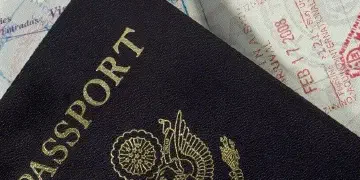
- a valid passport,
- a criminal record certificate,
- a health certificate for some agreements,
- proof of funds,
- insurance,
- and a return ticket or equivalent funds.
You apply from your home country, before traveling, not after arriving in Chile as a tourist, and once the visa is issued your 12-month authorization usually starts when you enter the country.
Processing takes from a few weeks to a few months depending on the consulate and season, so apply well before your intended departure, and remember that issuance is always at the discretion of the Chilean authorities.
Once in Chile, register your visa and get your Chilean ID card, which you will need for many things, for example to open a bank account.
What work is allowed on a working holiday in Chile?
The philosophy of the program is "holiday first, work to fund it." In practice, the visa allows you to:
- Work for any employer, in any sector, anywhere in Chile
- Change jobs freely, since the visa is not tied to a sponsor
- Take short courses or studies alongside work (limits vary by agreement)
Typical jobs include tourism and hospitality (a strong fit in Patagonia and the Lakes District high season), ski resorts around Santiago in winter, hostels, teaching or tutoring English, agriculture and harvest work, and remote freelancing. Some agreements limit how long you can work for a single employer, commonly six months, to keep the stay genuinely travel-oriented.
What the visa does not do: it does not extend beyond its term, and it is not designed to morph into permanent employment by itself. For that, you need to change status.
Staying in Chile after your working holiday
A surprising number of working holiday visa holders fall in love with Chile and want to stay. The working holiday year can be a genuine stepping stone:
- Found an employer who wants to keep you? Apply for a work visa backed by a contract. Time spent in Chile, local references, and Spanish skills make you a far stronger candidate than an applicant abroad.
- Other profiles (a Chilean partner, studies, starting a business) map to their own temporary residence categories. Our residency section compares the options.
- Thinking very long term? Temporary residence leads to permanent residency, and your years of legal residence count toward eventual citizenship.
Rules on changing status from inside Chile have shifted over the years under Ley 21.325, so check the current immigration service guidance: in some cases you apply from within Chile, in others through a consulate after leaving.
Make the year count
A working holiday is the lowest-commitment way to test-drive life in Chile, but quotas, paperwork, and what comes after the 12 months all require planning. Stay informed on changes to agreements, quotas, and immigration rules: