- Home
- Expat Guide
- Accommodation in Chile
- FAQ Investing in Chile
Last updated on 19/03/2026
Do I have to live in Chile to be able to invest?
No. You don't need to be in Chile, and you don't need a visa or residency. Any individual or corporate entity can acquire and own real estate in Chile regardless of residence status, except near country boundaries (within 10 km). Chile has strong legal protection of property rights and offers a stable environment for international buyers.
You can enter Chile on a tourist visa to view properties. From a tax perspective, you should request a RUT number (the Chilean tax ID) from any SII office to fulfill tax obligations related to the property. This is a simple procedure — show up with your passport and a guarantor.
Where should I buy? What do you recommend for a first investment?
It depends on your profile, your experience as an investor, and the amount of capital you want to allocate. If you already invest in a specific type of real estate, it's worth doing a comparative study to see if Chile presents opportunities in what you know.
If you're a private investor making your first purchase, I recommend small 1- to 2-bedroom apartments in well-located areas. The upside potential is lower, but the risk on resale is limited, should you need to liquidate. These properties rent quickly and have a broad pool of potential tenants.
If you have a longer investment horizon and more capital, agricultural land and water rights can be interesting options — but they require specific expertise and due diligence.
What is the most profitable type of investment in Santiago?
For long-term unfurnished leases (one year or more), annual gross rental yields in Santiago are approximately:
- Residential: 4 to 6% in Santiago, varying by neighborhood and property type
- Offices: 6 to 8%
- Commercial: 10 to 12%
However, profitability depends heavily on the purchase price and how you use the property. A small furnished apartment in a central area, correctly managed and rented short-term to tourists, can generate 15 to 20% gross yield. But short-term rental involves more work, more risk, and VAT obligations.
There are other types of investments that can provide higher returns. It depends on how much capital you have and how much risk you're willing to take. Contact us for a detailed discussion based on your situation.
Can I get a loan from a Chilean bank?
Getting a mortgage is difficult if you are not a permanent resident. Banks typically require permanent residency, a 20-30% down payment, proof of stable income in Chile, and extensive documentation. If you don't meet these criteria, most banks will decline.
Some developers offer direct financing with more flexible requirements, but at higher interest rates. For most foreign investors, cash purchases are the practical route. See our article on buying property in Chile for more details.
How should I optimize my investment from a tax perspective?
This depends on your overall financial situation and whether you hold the property directly or through a company. There is no universal answer — it must be part of a global strategy. However, two important points:
- Selling a property is subject to 19% VAT if the sale is made within a year of purchase, or if the SII considers you a "habitual seller" (there is no precise definition, but multiple buy/sell transactions in a year puts you at risk).
- Real estate capital gains have been taxed since 2017. Individuals benefit from a lifetime exemption of 8,000 UF, but companies do not. See our article on real estate taxes in Chile for all the details.
Consult a Chilean tax accountant before structuring your investment. The choice between personal ownership and a company can make a significant difference in your tax bill.

Do you want to go more in detail?
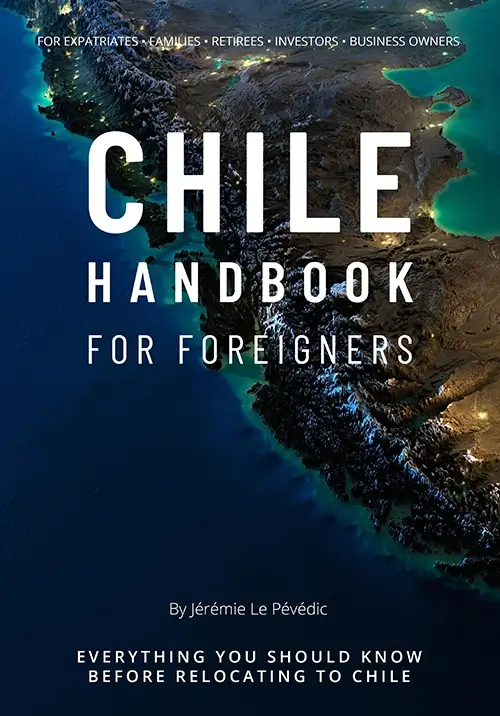
I wrote the Chile Handbook for Foreigners for anyone and everyone looking to move permanently and enjoy life in Chile. It's a 265-page book that goes over all aspects of relocating to Chile. Here is what you get:
✅ Practical tips based on 7-year relocation experience
✅ To-do lists to help you start
✅ Last updated in 2025